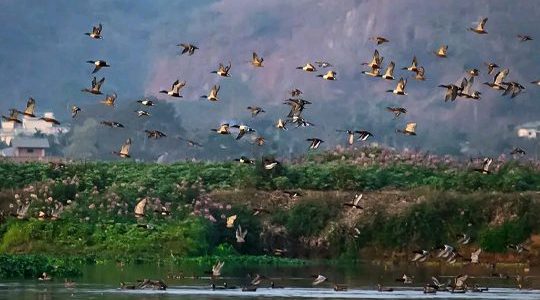
Nestled on the southern edge of Guwahati in Assam, Deepor Beel stands as one of India’s most ecologically significant wetland wildlife sanctuaries and a vital component of the country’s rich network of protected parks. Recognized as a Ramsar site, this expansive freshwater lake and its surrounding marshes provide a crucial habitat for a wide array of flora and fauna, including numerous resident and migratory bird species, some of which are globally endangered. As urbanization pressures mount in northeastern India, Deepor Beel remains a vital green lung and biodiversity hotspot, exemplifying the delicate balance between natural conservation and environmental challenges within India’s park system.

Chakardeo Village, Guwahati, Mikir Para Chakardoi, Assam 781035, India
Located in Chakardeo Village, Guwahati, Mikir Para Chakardoi, Assam 781035, India, Deepor Beel Wildlife Sanctuary stands as a vital ecological hotspot and a Ramsar site of international importance. This expansive wetland serves as a crucial habitat for numerous resident and migratory bird species, including the endangered Greater Adjutant Stork, making it a prime destination for birdwatching and ecological research. Its rich biodiversity, encompassing diverse flora, fish, and mammal species, underscores its role in regional conservation and sustainable environmental management. The sanctuary also functions as a natural flood buffer for Guwahati, highlighting its dual significance for both wildlife protection and urban resilience.
| Thursday | Open 24 hours |
| Friday | Open 24 hours |
| Saturday | Open 24 hours |
| Sunday | Open 24 hours |
| Monday | Open 24 hours |
| Tuesday | Open 24 hours |
| Wednesday | Open 24 hours |
More information
Where is Deepor Beel Wildlife Sanctuary located?
Deepor Beel Wildlife Sanctuary is located near Chakardeo Village, on the southwestern edge of Guwahati in the state of Assam, India. It lies close to Mikir Para Chakardoi and holds significant ecological importance as one of the few remaining freshwater lakes in the region, attracting a wide range of biodiversity.
Why is Deepor Beel important for wildlife conservation?
Deepor Beel is designated as a Ramsar site, recognizing it as a wetland of international importance. It serves as a crucial habitat for migratory birds, especially during the winter months, and supports endangered species such as the pygmy hog and the Ganges river dolphin. Its rich flora and fauna make it a vital area for conservation and ecological research in northeast India.
What kind of visitors experience does Deepor Beel offer?
Visitors to Deepor Beel can enjoy serene nature walks, birdwatching, and opportunities to observe local ecosystems in a tranquil setting. Though less developed for tourism than other parks in India, its untouched wetlands and proximity to Guwahati make it ideal for eco-tourists and nature enthusiasts seeking an authentic experience in a protected sanctuary.
What is the visitor rating for Deepor Beel Wildlife Sanctuary?
Deepor Beel Wildlife Sanctuary has a visitor rating of 4.4 out of 5 based on reviews from travelers and nature lovers. This high rating reflects appreciation for its natural beauty, biodiversity, and importance as a conservation area, despite limited infrastructure, making it a valued destination among eco-conscious visitors exploring parks in India.